Tag: Vedic Astrology

  • Mesha – Aries, Planet – Mangal (Mars)

    Native born with Aries sign (Mesha Rashi) possess qualities of having little bit dark complexion. They have brownish eyes. They are of medium height. They possess strong body. Such People are clever and solitary by nature. They possess smiling face. They are brisk walker. Such people are little angry and short tempered in nature. They are fond of travel and frequent transfers from place to place if in service. If in business they have touring feature.
    Such people always prefer to work under directions and guidance from others. They possess scars on forehead or face. They are prone to fevers and blood diseases. They are prone to skin disease. They possess large eyes and rough hair. Such People are ambitious, courageous and vigilant. They get their destiny by struggle and hard work. They are straight forward, generous and lovers of freedom. They are practical at work. They have weak knees and are allergic to suffocation. They are water phobic. This rashi includes Ashwini, Bharani and first Charan of Krittika Nakshatras.

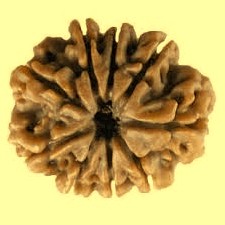
    • Recommendations:

    Note: Please consult before wearing gemstones.

  • The 27 Nakshatra- Lunar Mansion

    The Sanskrit word Nakshatra means “that which does not decay.” The Nakshatras permeate the whole universe and influence the quality of the Rashi in which they are positioned. In the same way the quality of the Graha depends to some extent on the Nakshatra in which it is positioned. The 27 Nakshatras are represented as 27 equal segments of a circle, each covering 13 degrees 20 minutes. The sequence of the 27 Nakshatras begins with Ashvini Nakshatra in Mesha Rashi.

    Click below to know more about 27 Nakshatra

    • Ashwini • Bharani • Kritika • Rohini • Mrigasira • Aadra • Punarvasu • Pushya • Ashlesha • Magha • PurvaPhalguni • UttaraPhalguni • Hasta • Chitra • Swati • Vishakha • Anuradha • Jyestha • Moola • PurvaAshadha • UttarAshadha • Abhijit • Shravana • Dhanishtha • Satabhisha  PurvaBhadrapada • UttaraBhadrapada • Revati 

    This illustration shows the sequence of the 27 equal segments of the Nakshatras, each consisting of 13 degrees 20 minutes, with their Sanskrit names and numbers. As seen from the earth, the moon passes through this circle of the 27 Nakshatras in about 27 days.

    In Vedic system of astrology, moon has been given the special importance. Moon travels through the sky and revolves around the earth. During this journey, moon travels through all of these nakshatras and at a particular time, it resides in a nakshatra. Moon resides in a nakshatra for approximately one day. Thus it takes the moon about one day to pass through one Nakshatra. The moon is shown here moving through Pushya Nakshatra in Karka Rashi. This example also shows the sun moving through Ashvini Nakshatra in Mesha Rashi. Each of the other planets is also moving through the 27 Nakshatras.

    In Vedic astrology , Nakshatra or constellation is one of many factors considered for doing the accurate predictions. These nakshatras are 27 in numbers and together they comprises of 360 degrees in the sky from a fixed point. So the value for each nakshatra is 13 degrees and 20 minutes. The 360 degrees from a fixed point comprises 12 zodiacs And 27 nakshatras. In other words, nakshatra is a further sub-division of zodiac. So this method of prediction using nakshatra is considered more accurate in Indian astrology than the method of prediction using zodiac.

    The term Nakshatra is a combination of naks and shetra. In Sanskrit, naks means sky and shetra means region or area. So the meaning of this word is region or area of sky. In Vedic astrology, the predictive system is based on janma nakshatra.

    Janma nakshatra is the nakshatra where moon is placed at the time of the birth of the native. Janma nakshatra plays an importance role in deciding the person’s personality, appearance, nature, luck his personal and professional life and level of achievements during his life-span.

    Nakshatras are ruled by their respective deities and planets. The respective deities and planets have their impacts on different aspects of the life of the native. The nakshatras are classified on the basis of many aspects. One aspect is on the basis of gender. The nakshatras are male and some are female. The other classification is on the basis of the temperaments and the nakshatras are divided in deva, human and rakhashas category. One more classification is based on the gunas namely rajo, tamo and sato guna.

    Nakshatra Pada:

    Each Nakshatra is divided into 4 equal parts of 3 degrees 20 minutes each part. These sections/parts are called Nakshatra Charans or Padas 1, 2, 3 and 4. Each Nakshatra Pada has its own significance for interpretation.

  • The 12 Rashi-Astrological Signs

    The body of the universe consists of the 12 Rashis, which can be roughly translated as “astrological signs.” Each Rashi represents a part of the body. The nine Grahas or planets govern this universal body. The 12 Rashis are represented as 12 equal segments of a circle, each covering 30 degrees.The sequence of the 12 Rashis begins with Mesha as the first Rashi.

    Click below to know more about the Rashies

    1. Mesha—Aries
    2. Vrishabha—Taurus
    3. Mithuna—Gemini
    4. Karka—Cancer
    5. Simha—Leo
    6. Kanya—Virgo
    7. Tula—Libra
    8. Vrishchika—Scorpio
    9. Dhanu—Sagittarius
    10. Makara—Capricorn
    11. Kumbha—Aquarius
    12. Meena—Pisces

  • The 9 Graha-Planets

    The Grahas, roughly translated as planets, are more than simply planets hanging in space. They are part of the administration of Natural Law, which governs the whole universe. For example Surya, the Sun, represents consciousness; Chandra, the Moon, represents the cosmic mind; Budha, the planet Mercury, the cosmic intellect; etc.

    For more detail click below links-

    1. Surya—Sun
    2. Chandra—Moon
    3. Mangal—Mars
    4. Budha—Mercury
    5. Guru—Jupiter
    6. Shukra—Venus
    7. Shani—Saturn
    8. Rahu—Ascending lunar node
    9. Ketu—Descending lunar node


  • Introduction of Vedic Indian Astrology

    Astrology is the language of the stars … it is in fact the Universal language.

    Vedic Astrology is an ancient Indian science which explains planetary motions and positions with respect to time and their effect on humans and other entities on earth.

    Astrology is the science of the effects of the planets movements on our lives and all things. Astrology is based on astronomy in that astrologers need to know the correct positions of the planets at any given time, as well as the correct positions of the zodiacal fixed star signs in relation to any place on earth at any given time. Once the correct positions of the signs and planets are known, the astrologer then constructs charts representing these positions, and using the astrological science, studies the charts and can make quite a wide range of conclusions about the moment the chart was cast for.

    These planetary forces take on different forms, depending on their zodiacal position and on the way they relate to one another. The aspects formed between the planets describe these relationships, the positions of the planets in relation to the place of birth tell us of their expression in the spheres of life depicted by the astrological houses. By interpreting the roles of these players (the planets) and their qualities (the elements, signs and houses) and creating a synthesis, astrology is able to present a complete and comprehensive picture of the person and his potential, based on the natal horoscope.

    Astrology is without doubt the original science, the oldest of the systems of knowledge devised by human beings. It is the science of fate/destiny used for understanding events happening on earth.

    Astrology does not pronounce any judgment. Just like nature, it has no good or bad. It just reveals what was, what is, and what can be.

    Based on the ancient Vedic Indian system Horoscopes made on vedic principles, Get your lucky stones, your lagan / nakshatra.

    Astrology is not about depending on fate as a lot of people purport it to be. In fact, it puts more emphasis on karma than fate. Today’s ‘karma’ is tomorrow’s ‘fate’.
    Astrology is the science of ‘light’ and lights the path known as life. It is finally up to us to traverse the path once it has been lighted. Astrology is amazingly accurate … it can work accurately even on a daily or hourly basis if required.

    Astrology is not only the foremost of the outer sciences which deal with the nature of the physical universe, it is one of the most important of the inner or spiritual sciences which deal with the mind and soul.